
A Tapestry of Tradition: Celebrating AAPI Heritage Through Textiles
Do you have a piece of cloth, clothing, embroidery, or other textile that has a story you'd like to share? Please send us a photo and some details and we'll post it to the Connect Newsroom. Email us at InternalCommunications@cookchildrens.org.
 As we celebrate Asian American & Pacific Islander Heritage Month, we turn our attention toward a vibrant expression of culture: textiles. Woven with rich histories and intricate designs, these fabrics are more than just cloth; they are a tapestry of tradition passed down through generations.
Across the diverse regions of Asia, Hawaii, and the Pacific Islands, textiles play a vital role in conveying the unique stories of each place. From the vibrant colors of India's saris to the intricate patterns of China's silk brocades, each textile tells a tale of cultural identity and heritage.
The skill and artistry behind these textiles are remarkable. Crafted from various natural fibers like cotton, camel hair, and silk, they hold a deep connection to the environment and the communities that create them. Experts can even determine the age, location, and use of a textile by examining its look and feel.
This May let's take a moment to appreciate the beauty and significance of Asian and Pacific Islander textiles. They are a powerful reminder of the enduring spirit and artistic traditions that continue to inspire us today.
Do you have a piece of cloth, clothing, embroidery, or other textile that has a story you'd like to share? Please send us a photo and some details and we'll post it to the Connect Newsroom. Email us at InternalCommunications@cookchildrens.org.
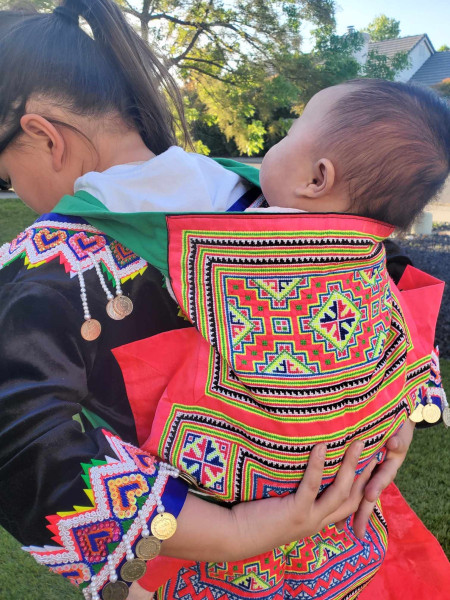 This is a Hmong baby carrier that is commonly used and passed down from generation to generation. Pictured here are my nieces Scarlett, age 8, helping carry her baby sister, two-month-old Paige.
Tracy Vang, Director, Equity and Inclusion, Diversity, Equity, Inclusion
Anish Ray, M.D. and his family attending an Indian cultural festival. Dr. Ray is wearing a Punjabi (also known as a Kurta), his wife Ayesha is dressed in a traditional Saree, and his daughter Uma is wearing a Salwar-Kameez. Traditional Indian clothing is rich in cultural significance and diversity, reflecting the country’s vast history and regional traditions.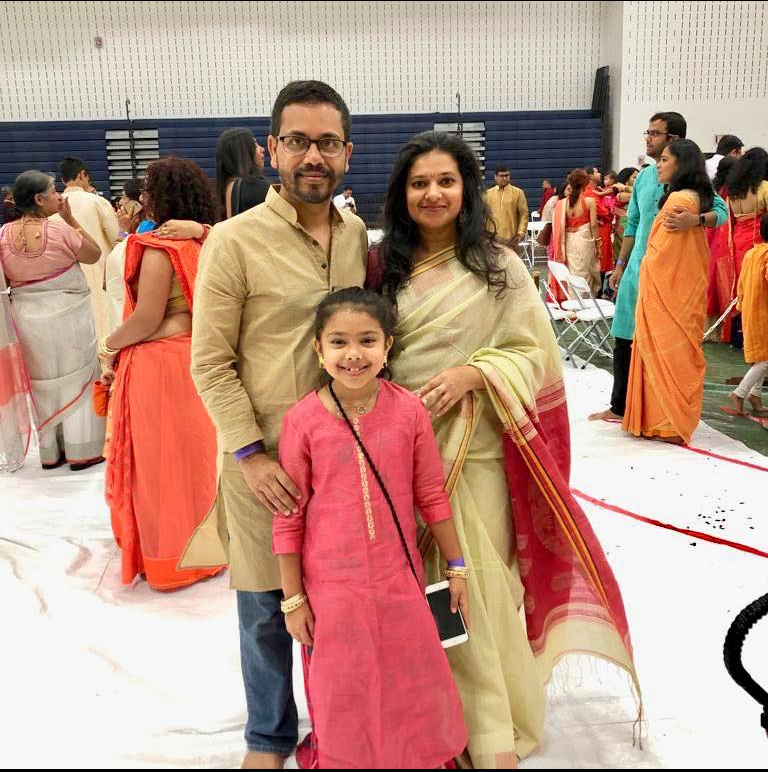
Do you have a piece of cloth, clothing, embroidery, or other textile that has a story you'd like to share? Please send us a photo and some details and we'll post it to the Connect Newsroom. Email us at InternalCommunications@cookchildrens.org.