How Social Workers Fill Critical Gap at Neighborhood Health Centers
By Ashley Antle
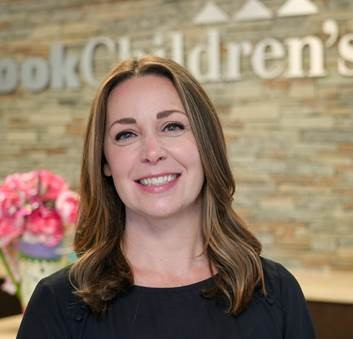
When Christina Reed, LMSW, became the Operations Director for Cook Children’s Health Care System’s seven Neighborhood Health Centers (NHCs) in 2019, she noticed a critical gap. The centers lacked an important link in the chain of overall health — the social services support that connects the dots between physical, mental and emotional health.
By education, Christina has a master’s degree in social work and spent many years as a social worker for trauma and medically complex patients.
“When I was graduating high school and trying to figure out what I wanted to do with my life, and after thinking through some of my own childhood experiences, I realized that I had a passion and a desire for helping people and, more importantly, helping at-risk kids,” Reed said.
While her current role is an administrative one, Christina can’t help but lead with her social work heart. It’s a unique blend of experience and expertise that makes her the perfect fit to oversee operations for the NHCs, which are primarily located in economically disadvantaged communities.
“Obviously me being a social worker, bringing a dedicated and comprehensive social services program to the NHCs was at the top of my agenda because the entire purpose and goal of these clinics is to open up access and provide that medical home model for children supported by Medicaid, CHIP or some type of government payer,” Christina said. “That fact, in and of itself, means the majority of families we're serving are low income and living with really challenging circumstances, which often means they need additional support beyond just medical care.”
Armed with her passion for helping children and their families, Christina went to work building and shaping a social services program for the NHCs. Her vision was a program that places a dedicated family advocate at all seven Cook Children’s NHCs in order to help families navigate resources that meet their daily health and living needs. She’s also overseen the development of a behavioral health program that includes both social workers and licensed behavioral health therapists to address the rising mental health needs among children and teens.
“A lot of the needs of families coming to the NHCs stem from things that are beyond their physical health and beyond the scope of their primary care physician,” Christina said. “You are not going to move the needle on their physical needs if they have social barriers to health care. So having someone there to address the social and mental barriers, and provide these wrap around services to families is absolutely critical.”
Change Makers
Kelly Rand, a Licensed Clinical Social Worker (LCSW), is the first person Christina hired to the team. She is the manager of Patient and Family Support Services at the NHCs, which now includes two social workers, five behavioral health therapists and five family advocates, with the hopes of adding more soon. Several of the family advocates also have degrees in social work, as do some of the behavioral health therapists.
Patient by patient and family by family, this team works to dismantle the barriers that prevent children from living their healthiest lives.
“Our family advocates can tell you that we see a lot of gaps in basic needs for families where there is just not enough income in the household to cover all of the necessities like housing, transportation and food for everyone,” Kelly said. “When a family doesn't have their basic needs met, it's really hard for them to think about or meet the health care goals for their child.”
Kelly says she can share story after story of how family advocates have worked with NHC physicians, nurse practitioners and other care providers to identify and understand a patient’s health barrier. Take the case of a child who struggled with chronic allergies, for example, and needed a humidifier to help alleviate symptoms, but the family budget did not have room for this purchase. Together with the child’s physician, a family advocate was able to identify the need and connect the family with a resource for a humidifier. With improved symptoms, the child no longer required multiple visits to the clinic. A simple solution to a big problem that made a substantial impact on a child’s overall health.
There are thousands of other stories like this one. In 2023, the family advocates responded to 5,904 referrals across all of Cook Children’s NHCs. That’s more than double the referrals in 2022. Many of these needs are met through a Cook Children’s Health Foundation grant provided to what the NHCs call their neighborhood needs fund.
“This funding has allowed us to purchase assistance items for patient families that directly impact the safety and health of the child,” Kelly said. “I think it’s one of the programs that I'm most proud of, and it's our family advocates that are the ones that are identifying those needs and advocating within the department for those families. That's how we know what direct assistance resources to provide.”
On the behavioral health side, the needs are just as great, and compounded by long wait times for appointments due to a shortage of mental health providers in network with Medicaid and CHIP.
That’s where the behavioral health social workers and therapists play a crucial role. They assess, make referrals to mental health providers and coordinate needed resources to support children in crisis. They also provide on-site mental health counseling, which allows children to receive counseling services within their medical home where they are familiar with the providers and have already established trust. This team serves as a vital, and sometimes life saving, resource for hurting children and teens.
In 2023, the NHC behavioral health team provided counseling for 467 unique patients that totaled 2,294 appointments.
Kelly expects the needs within the community to continue to grow, and says the NHC’s Patient and Family Services will follow suit. Her sights are firmly set on her vision of family advocate and behavioral health team members at every clinic, working hand-in-hand with medical providers to make the Neighborhood Health Centers a truly integrated medical home for physical, mental and emotional health.
“Social workers are inherently change makers,” she said. “In addition to our clinical skills, we’re here to advocate and push policies and programming that drive change for the people and communities we serve. It’s what I absolutely love about what I do.”