Training the Pediatric Professionals of Tomorrow
Academic & Medical Education immerses learners in the clinical skills and workplace culture at Cook Children's.
By Jean Yaeger
Around 3,000 learners come to Cook Children’s each year for hands-on instruction that includes elective rotations, research and observation in fields from nursing and pharmacy to public health administration.
The Cook Children’s Academic & Medical Education Department places most of those learners at our medical centers in Fort Worth and Prosper. They can also be found at primary care offices around North Texas, at our specialty clinic in Amarillo, and at other sites throughout the system as well as home health visits.
Education creates a collaboration that gives medical students and other learners the opportunity to be mentored by health care professionals while interacting with patients and patient families. The learners also see first-hand how values such as safety, respect, kindness and imagination are practiced routinely at Cook Children’s.
“We're building the workforce of the future,” said Debra Jorden, Director of Academic & Medical Education. “Cook Children’s has a phenomenally unique model for health care delivery that we want to share with future health care workers. We want to impart that culture as well as the knowledge to the students.”
Pediatric groups nationwide point to workforce shortages in primary care and many specialties such as developmental behavioral pediatrics, neurology and psychiatry. Rural areas are a particular concern.
Jamie Bankston, AVP of Education and Professional Development at Cook Children’s, said on-site learning paves the way to help fill those critical needs. Jamie sees education as an investment that pays off with a pool of well-formed graduates who might someday return to Cook Children’s as staff.
“Our community is growing, and our system is expanding,” she said. “It’s important to think about how to fill those positions tomorrow, next month and in the next few years down the road. We must take into account national shortages and trends experienced in various disciplines.”
Thousands of learners benefit each year from their placement at Cook Children’s facilities, where they’re molded by the expertise and passion of the employees who teach them. Our program serves two types of education: academic and medical. Here’s the breakdown.
Academic Education
Most of the 1,902 academic learners at Cook Children’s in fiscal year 2023 were nursing students. More than 50 other fields of learning include social work and case management, paramedic/EMT, pharmacy, physician assistant, radiology/imaging, physical therapy, speech therapy, occupational therapy, audiology, respiratory therapy and health information management.
Observers ages 18 and older also make up the Academic Education category. There were 359 observation requests last year, mostly from young adults seeking career direction and entry into graduate programs. Observers got a taste for occupations in child life, anesthesiology, nutrition, nurse practitioner and more.
Medical Education
In the 2023-2024 school year, Cook Children’s placed 838 rotations of medical students from four institutions: Texas Christian University Burnett School of Medicine, Texas College of Osteopathic Medicine, Texas A&M School of Medicine and Texas Tech University School of Medicine in Amarillo. Some did rotations lasting from two weeks to 40 weeks; others did special studies or research.
Cook Children’s limits its medical education to the four schools because of capacity. Taking on more students than the facilities and staff can accommodate would dilute the education experience, Debra said.
Cook Children’s does not offer a pediatric residency program for medical school graduates. However, visiting residents from other programs are hosted at Cook Children’s in order to fulfill their curriculum requirements for pediatric training.
There were 159 resident rotations in 2023-2024. That number fluctuates year to year as resident requests are made by the local academic programs that partner with Cook Children’s.
“We have to go through a process to see if we have the capacity,” Debra said. “What is the availability and do those new residents displace other learners? We have processes in place so that we're equitable, and we keep in mind our own capacity.”
The Learning Advantage
Compared to simulation, education at Cook Children’s gives real-life experience with patients from newborn through the teen years. The learners see and participate in care for injuries and illnesses, including rare diseases. Their research has been published and presented at local and national venues.
“Cook Children’s is known for exceptional specialties, including neurology, endocrinology and cardiology. We have many nationally recognized experts,” Jamie said. “Students often gain exposure to diagnoses and treatment plans they might not have had the opportunity to see if they were at a smaller hospital or an adult hospital that occasionally treats pediatric patients.”
Learners wear a Cook Children’s badge as well as their own school’s badge to identify they’re in training. They’re encouraged to speak up and are welcomed into meetings or project teams during their time at Cook Children’s.
“They not only gain clinical experiences here with us, but also benefit from shadowing and observation experiences. Those opportunities help provide a system perspective, enabling a deeper understanding the ‘why’ behind decision-making processes,” Jamie said.
Emphasis on safety starts when the learners go through onboarding. The Zero Harm quality initiative at Cook Children’s, which makes patient safety the priority, is stressed to all employees and volunteers as well as the learners.
“That is inherent in the experiences these students have with us,” Jamie said. “It's carried out throughout their experiences whether they're in an urgent care setting or in the medical center or in a clinic building. There really is buy-in from all of our employees to support Zero Harm.”
In addition to the culture of safety, learners at Cook Children’s pick up on other values that are modeled:
- Kindness in conversations with patients and colleagues
- Collaboration across departments
- Respect, such as respect for patient confidentiality and diversity
- Innovation to embrace change
- Generosity shown by the staff, known as preceptors, who volunteer their time to teach the learners
- “When the students are at Cook Children's, they should experience that culture walking down the hallway,” Debra said. “What they should see that sets us apart from other organizations is that people make eye contact. They say, ‘Hi, how are you doing?’ Everybody, in my opinion, has a responsibility to epitomize Cook Children's culture.”
Role of the Preceptors
A preceptor is an expert in the knowledge and skills a particular student needs to reach their professional goals. The preceptors at Cook Children’s give constructive feedback, encouragement and mentoring as they work with the learners in patient care, rehab, research or other settings.
For instance … a preceptor might advise learners on proper documentation technique, or suggest an appropriate tone for an email, or coach them to greet patient families with friendliness.
Preceptors step up voluntarily because they want to help shape future health care workers. But they’re often selected by department leaders who recognize their outstanding qualities.
“It's not just that they're good at what they're doing or that they have the head knowledge, but they also have the behaviors and the attitudes that we want conveyed to the next generation,” Debra said.
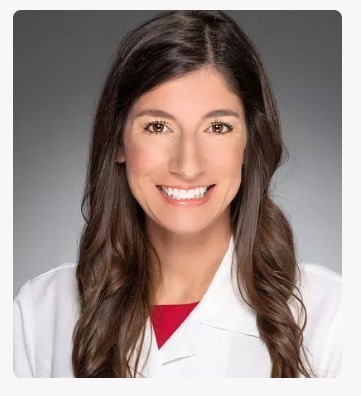 Elizabeth Peeler, D.O., is a child abuse pediatrician on the Cook Children’s C.A.R.E. Team, which provides advocacy and medical evaluations for suspected victims of child abuse and neglect. A month-long rotation on the C.A.R.E. Team involves the students in aspects such as communication and collaboration with community agencies such as Child Protective Services. As much as the learners benefit, Dr. Peeler says she benefits too as their mentor.
“They’re so motivated, so innovative, and they challenge the gold standard,” she said. “They ask such unique questions that they encourage you to grow. I enjoy the relationship with them as much as I hope they enjoy working with me.”
Dr. Peeler points out to students that her own introduction to child abuse medicine came when she was a student at Texas College of Osteopathic Medicine (TCOM) and did a rotation on the Cook Children’s C.A.R.E. Team. That rotation inspired her career choice and eventually led her back to Cook Children’s, where some of her current colleagues helped train her in 2015.
In medical school Dr. Peeler completed rotations at several other health care facilities in Texas. But the culture of teamwork and respect at Cook Children’s stood out.
“We talk about making moments of magic, and that’s where we make a difference,” she said. “There’s an art to medicine, and we value kindness, respect and compassion. Connecting on a human level is really I think what sets us apart. Those experiences are learned early, and I think those things are intangible. You can’t learn those things through a textbook.”
Medical School Perspective
Priya Bui, D.O., also rotated through Cook Children’s as a medical student. She’s now an associate professor and the Chair of the Department of Pediatrics and Women's Health at TCOM. About half of every TCOM graduating class typically does pediatric clerkships and elective rotations at Cook Children’s, Dr. Bui said.
Sometimes medical students enter a pediatric rotation with their minds already made up that they want to practice health care for adults. But Dr. Bui has seen some of them pivot to pediatrics after coming into contact with the variety, fulfillment and joy of meeting the health needs of children. Pediatrics even took Dr. Bui by surprise when she herself was a third-year medical student. She remembers that one of her Cook Children’s mentor physicians taught her not to be afraid to examine a sick or seemingly fragile baby.
“I would say within the first three days of my pediatrics rotation, I knew I found my people and my place in pediatrics,” she said.
First- and second-year medical students at TCOM learn skills they put into practice when they go to Cook Children’s in their third or fourth years. The culture at Cook Children’s -- where from the first moment you interact, everything is for the child -- aligns with the TCOM emphasis on the patient’s viewpoint, Dr. Bui said. About 50 TCOM graduates now work as Cook Children’s physicians.
“It's this beautiful relationship of giving to our students and mentoring them, inspiring excellent students to become pediatricians,” she said. “They remember that experience, and they choose to come back.”
The Academic & Medical Education Department shares that vision for a robust pipeline of well-prepared learners who will one day make Cook Children’s their professional home.
“By rotating with us at Cook Children's, we hope to influence them toward a career in pediatrics,” Debra said. “The schools have trained them to a certain point. We're training them for the actual-feet-on-the-ground positions they're going to serve in. To me, that's giving back to the community.”
“It’s our hope that we are preparing a workforce that is truly qualified and who loves pediatrics,” Jamie said. “We hope to steer people toward a career they can love for a very long time.”